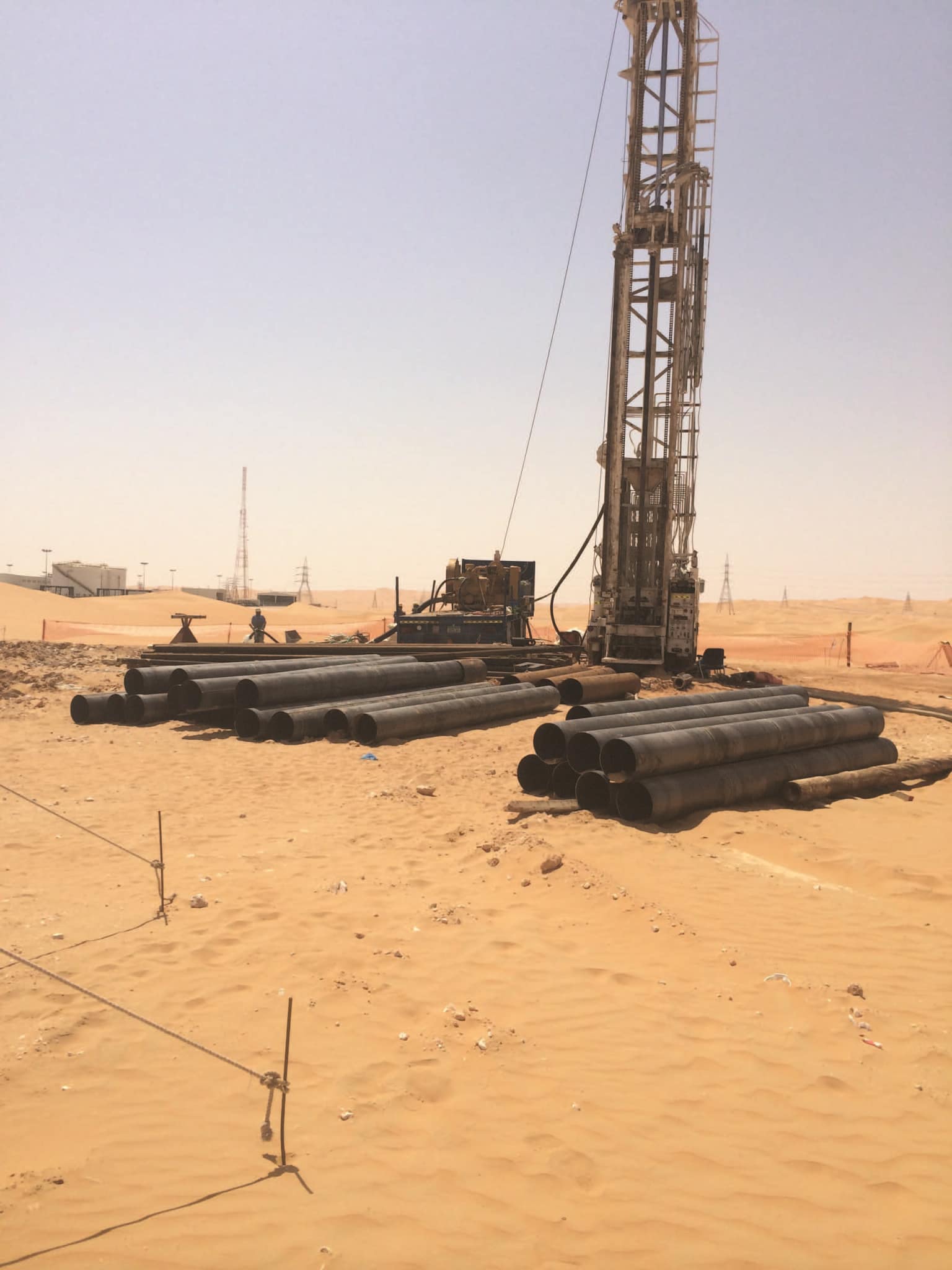
Effective dewatering is not a single activity; it is a controlled system that links subsurface conditions, installation quality, monitoring discipline, and operational continuity. In deep excavations, uncontrolled groundwater can degrade productivity, compromise stability, and increase safety exposure through wet working areas, soft formation zones, and unexpected inflows.
What a Dewatering System Must Achieve
A dewatering system succeeds when it consistently achieves three outcomes:
Water level control: drawdown to the required elevation across the excavation footprint, not only at isolated points.
Operational stability: predictable performance over time despite variability in ground conditions and site interfaces.
Compliance and traceability: controlled discharge practices and records that demonstrate execution and monitoring discipline.
This is why system selection must be grounded in field reality: access constraints, program milestones, discharge limitations, and the client’s acceptance pathway. Dewatering is rarely “install and leave”; it is “install, verify, operate, record, and hand over.
Selecting the Right Approach (Deep Wells, Wellpoints, or Hybrid)
Method selection is determined by permeability, target drawdown, excavation geometry, and time constraints. In practice:
Deep wells are preferred where significant drawdown is required and permeability supports efficient pumping.
Wellpoints are often effective for shallow drawdown and granular strata with manageable suction limitations.
Hybrid systems can be appropriate where groundwater behavior changes across the site or phased excavation requires adaptive control.
Execution Discipline: Installation, Monitoring, and Continuity
Dewatering performance is rarely limited by pumps alone; it is often constrained by installation quality, interface management, and monitoring discipline. Our operational approach typically includes:
Installation controls: location verification, depth controls, and systematic installation records.
Commissioning checks: startup performance observation and practical verification of flow stability.
Monitoring routine: agreed frequency, logging format, and response triggers when trends change.
Continuity planning: standby capacity and operational readiness for program-critical periods.
“Enrich Drilling mobilized quickly and maintained controlled groundwater conditions throughout our excavation program. Daily reporting was clear, the system remained stable, and the handover documentation supported consultant acceptance without delay.”
HUSSIEN AL-MOBARAK, CEO & Owner Tweet
Discharge Control and Site Compliance
Discharge management is increasingly decisive in dewatering success. Even where drawdown is technically feasible, discharge constraints can determine the method and operational strategy. As part of planning, we align discharge routing, basic controls, and site requirements to reduce disruption and support compliance on active construction sites.
Documentation-Ready Handover
For many projects, the “handover pack” is what separates a completed scope from a disputed scope. We structure records so stakeholders can verify what was installed, how it performed, and how it should be operated. A typical documentation package may include installation records, monitoring logs, daily reporting summaries (where required), and closeout notes aligned with the project’s acceptance pathway.